While casual tourists flock to Rose Island primarily for swimming pigs and beach bar cocktails, experienced mariners and divers know the island’s crowning glory lies beneath the surface.
Stretching along Rose Island’s northern shore lies one of the healthiest and most accessible barrier reef ecosystems in the Commonwealth of The Bahamas. Protected from ocean swells by a continuous coral crest, this gin-clear marine corridor features shallow patch reefs, grazing sea turtle sanctuaries, and the historic scattered skeleton of the 1929 Mahoney steamship wreck.
Whether you are floating over purple sea fans on a guided tour or free-diving an offshore wreck from a private powerboat charter, this guide details depth profiles, historical facts, marine species, and optimal tide windows.
Rose Island Snorkeling & Reef Highlights (TL;DR)
- Two Distinct Marine Ecosystems: The northern shoreline features a continuous barrier reef in 10 to 35 feet (3 to 10 m) of water bordering the deep Northeast Providence Channel. The southern shoreline features shallow sandbars and turtle grass beds in 3 to 10 feet (0.9 to 3 m) of calm water.
- The Historic Mahoney Shipwreck (1929): A 212-foot steel steam freighter grounded in 1929 and dynamited by British colonial authorities. Today its massive boilers, iron frames, and hull plates form an artificial reef in 12 to 20 feet (3.6 to 6 m) of water just 150 yards off the western reef.
- Green Cay Sea Turtle Sanctuary: Situated 1.5 miles northwest of Rose Island, this protected marine meadow provides feeding grounds for dozens of juvenile green and hawksbill sea turtles grazing in 6 to 12 feet of crystal-clear water.
- The Glassy Morning Window: Water clarity and surface calmness peak between 8:30 AM and 10:00 AM before trade winds build and large commercial catamarans churn the sandbars.
- Gear Deposit Reminder: Sandy Toes provides high-grade snorkel gear but requires a $10.00 USD refundable cash deposit per set. Bringing your own mask and snorkel saves time and money.
The Underwater Topography: Northern Barrier Reef vs. Southern Bank
Rose Island’s unique geography as a narrow barrier island creates two radically different aquatic environments separated by just a few hundred yards of land:
The Northern Barrier Reef Lagoon
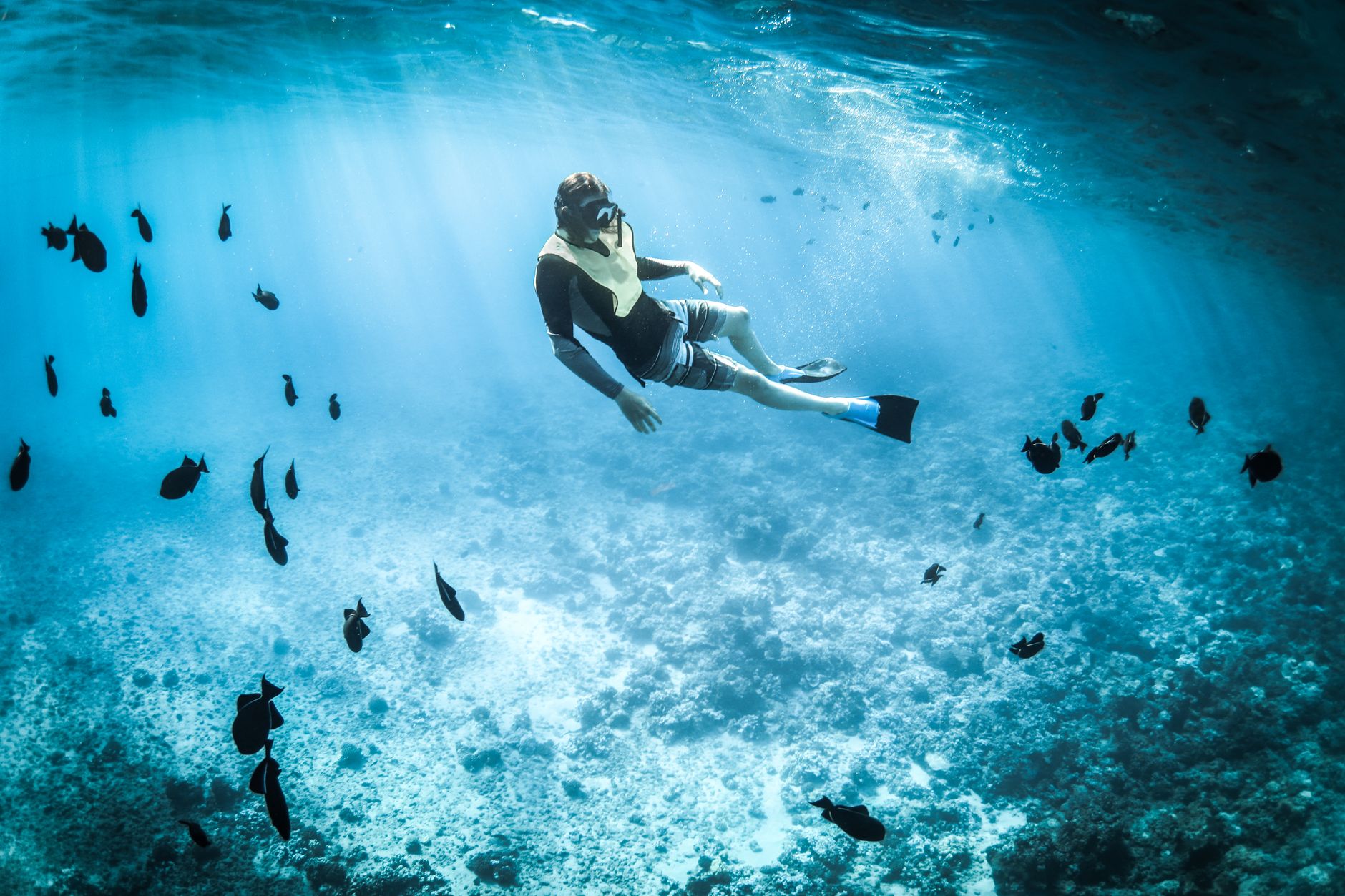
Facing open Atlantic waters, a dense fringing barrier reef runs parallel to the island roughly 100 to 300 feet offshore. This reef acts as a colossal submerged wall, taking the brunt of Atlantic swells and leaving an ultra-calm, aquarium-like lagoon between the reef crest and the white sand beach.
- Depth: 10 to 35 feet (3.0 to 10.7 meters).
- Coral Formations: Towering mountainous star corals (Orbicella faveolata), massive grooved brain corals (Diploria labyrinthiformis), mustard hill corals, and waving purple sea fans (Gorgonia ventalina).
- Marine Residents: Blue tangs, parrotfish, queen angelfish, banded butterflyfish, yellowtail snappers, southern stingrays, and harmless nurse sharks resting under limestone ledges.
The Southern Leeward Bank
Facing south toward the Great Bahama Bank, this side is almost entirely sheltered from prevailing north and northeast trade winds.
- Depth: 4 to 12 feet (1.2 to 3.6 meters) over blinding white carbonate sand and sprawling turtle grass meadows (Thalassia testudinum).
- Marine Residents: Green sea turtles grazing on seagrass, queen conch foraging in sand channels, and schools of silver bonefish skimming the flats.
The 1929 Mahoney Shipwreck: History & Wreck Profile
The premier snorkeling and shallow diving attraction off Rose Island is the historic wreck of the Mahoney.
+-------------------------------------------------------------------------+
|                  THE 1929 MAHONEY SHIPWRECK PROFILE                     |
|                                                                         |
|  Surface: [0 ft] ~~~~~~~~~~~~~~~~~~~~~~~~~~~~~~~~~~~~~~~~~~~~~~~~~~~~~  |
|                      |                                                  |
|  Depth: [12-14 ft]   +--- Massive Steel Steam Boiler (Boiler Chimney)  |
|                      |                                                  |
|  Depth: [16-18 ft]   +--- Twisted Iron Hull Ribs & Engine Mounts        |
|                      |                                                  |
|  Seafloor: [20 ft]   +=== Keel Plates & Propeller Shaft in White Sand  |
+-------------------------------------------------------------------------+
The Grounding and Colonial Dynamiting
Constructed in the late 19th century as a 212-foot steel-hulled steam freighter, the Mahoney serviced maritime freight corridors between the United States and the West Indies. In 1929, while attempting to navigate the eastern approaches to Nassau Harbour during a severe squall, the vessel grounded hard on the shallow reef bar between Paradise Island and the western tip of Rose Island.
Unable to salvage the vessel, and recognizing that the exposed hull posed a major navigational hazard to commercial shipping entering Nassau Harbour, British colonial authorities made the decision to dynamite the wreck. The explosion sheared the superstructure and blew the hull apart, scattering heavy steel plates, steam boilers, and iron hull ribs across the ocean floor.
What Snorkelers and Divers See Today
Over nearly a century of immersion, nature has reclaimed the wreckage, transforming the Mahoney into one of the most prolific shallow artificial reefs in The Bahamas:
- The Steam Boilers (12–14 ft): The twin steel boilers stand upright like underwater monoliths, encrusted in fiery orange encrusting sponges and delicate hydroids. Snorkelers can peer directly down into the firebox openings where massive green moray eels frequently dwell.
- The Keel and Engine Mounts (16–20 ft): Massive steel beams and the propeller shaft stretch across the white sand, creating shaded cavernous overhangs where yellowtail snappers, schoolmaster snappers, and juvenile goliath groupers congregate.
- The Sister Wreck (The Alcora): Located nearby in 18 to 22 feet of water, a smaller second cargo wreck—the Alcora—adds another level of exploration for free-divers and scuba enthusiasts on private charters.
Green Cay: The Sea Turtle Sanctuary
Located 1.5 miles northwest of Rose Island, Green Cay is a vital wildlife waypoint included on nearly all 3-Island speedboat excursions and private charters.
Why Turtles Gather Here
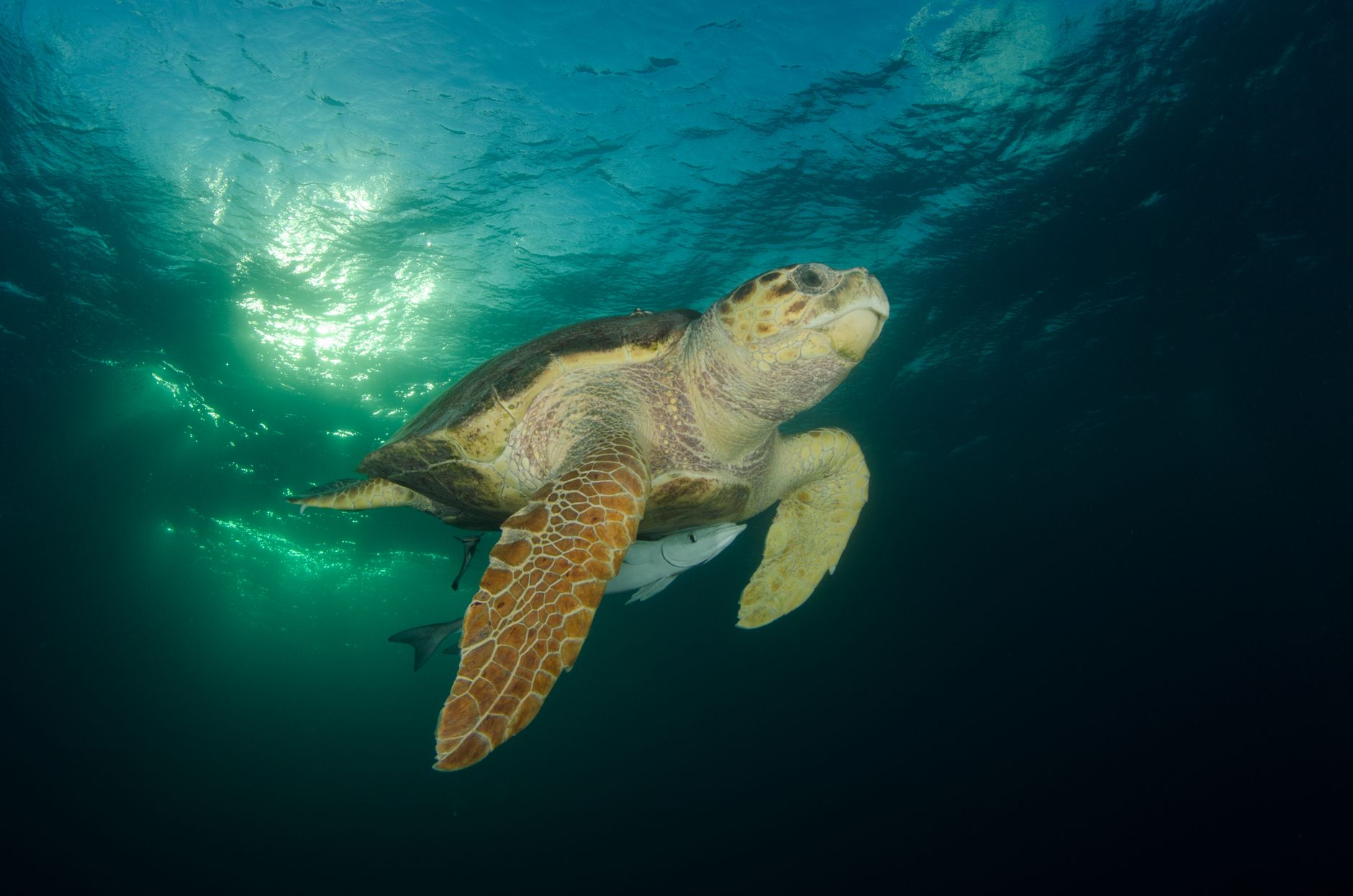
Green Cay is bordered by shallow, sun-drenched sand flats covered in dense turtle grass (Thalassia testudinum). Unlike coral reefs, these seagrass meadows serve as the primary dietary staple for herbivorous juvenile green sea turtles (Chelonia mydas) and omnivorous hawksbill sea turtles (Eretmochelys imbricata).
At any given time, between 15 and 30 sea turtles inhabit the shallows surrounding Green Cay. Because excursion boats arrive on predictable schedules, the turtles have become habituated to vessels and will calmly graze on seagrass right beneath swimming snorkelers.
Turtle Etiquette & Bahamas Conservation Law
Under the Bahamas Fisheries Resources (Jurisdiction and Conservation) Act, all sea turtles in Bahamian waters are 100% legally protected:
- Zero Touching or Chasing: Never attempt to grab, ride, or touch a sea turtle’s shell. Chasing turtles causes severe distress and forces them to dive into deeper water where boat traffic is heavier.
- Observe from 6 to 10 Feet: Float calmly on the surface. Green turtles must surface every 5 to 15 minutes to breathe; by remaining motionless, turtles will frequently surface just arm’s length away to inhale before swimming back down to graze.
Gear Recommendations & Environmental Safety
To maximize your snorkeling experience and safeguard the fragile reef, follow these guidelines:
1. Reef-Safe Mineral Sunscreen
Standard chemical sunscreens contain oxybenzone and octinoxate, chemical agents proven to bleach coral polyps and disrupt marine DNA. The Bahamas actively encourages mineral-based sunscreens utilizing non-nano zinc oxide or titanium dioxide. Apply 20 minutes before boarding your boat.
2. High-Quality Dry Snorkel & Silicone Mask
While operators provide complimentary equipment, rented gear often has stiff rubber skirts and basic open-top snorkels that let seawater flood in during surface chop. Bringing your own purge-valve silicone mask and dry-top snorkel ensures leak-free viewing.
3. Rash Guard or UV Swim Shirt
A long-sleeve UPF 50+ rash guard protects your back and shoulders from the intense Bahamian sun while eliminating the need to apply sunscreen to your torso. It also guards against occasional contact with harmless hydroids or sea lice in the water column.
Frequently Asked Questions Regarding Snorkeling
Can non-swimmers snorkel the Rose Island reef?
What is the underwater visibility at Rose Island?
Are there sharks on the Rose Island snorkeling reef?
How far is the reef from the beach?
Explore the Rose Island Barrier Reef
Book a guided reef snorkel excursion with equipment, boat transfer, and swimming pigs included.
View Verified Reef Snorkel Tours →Ready to Experience Rose Island Bahamas?
Book a verified day excursion covering the swimming pigs, barrier reef snorkeling, and beach club relaxation with guaranteed on-time return to Nassau Cruise Port.